WINDTURBINEwww.windturbine.com
Wind farm with three-blade turbines at sunset

Wind turbines for sale · 300 W – 200 kW, factory-direct

Small wind turbines that pay for themselves.

Direct-drive permanent-magnet generators, a 2.5 m/s cut-in wind speed and blades that stay quiet in gusty wind. Engineered in our own factory, shipped worldwide, supported for the life of the machine.

300 W–200 kWModel range
2.5 m/sCut-in wind
59.5 m/sSurvival wind
IP54Nacelle rating
Direct-drive PMGNo gearbox, no oil, fewer parts to fail
Cut-in 2.5 m/sProduces usable power in a light breeze
IEC 61400-2 practiceSmall wind design and load case basis
Grid-tie & off-gridOn-grid, battery, hybrid and diesel-parallel

Transparent pricing

Three power classes. Match your budget first.

Indicative ex-works prices include the controller; tower and shipping are quoted per project. Within each class the price moves with rotor diameter and tower height.

Product range

One platform, seventeen models

From a rooftop unit that charges a battery bank to a 200 kW machine feeding a factory meter, the same generator, controller and safety logic scale across the range.

Horizontal axis

GH series · 1–200 kW

Upwind three-blade turbines for open sites, farms and commercial rooftops with a clear wind window.

Rated power1–200 kW
Rotor diameter1.2–30 m
Cut-in wind2.5 m/s
Generator3-phase PMG
See specifications
Vertical axis

GH-H series · 1–100 kW

Omnidirectional rotors that accept wind from any direction — ideal for turbulent urban and rooftop sites.

Rated power1–100 kW
Rotor1.7–15 m
Cut-in wind2.0 m/s
Noise45 dB
See the H-type range
Hybrid

Hybrid power systems

Wind, solar, battery and backup generator combined on one controller with remote monitoring.

ArchitectureDC / AC coupled
StorageLiFePO₄ / lead-acid
BackupDiesel auto-start
ControlMPPT + dump load
See applications

Why WINDTURBINE

Built for real sites, not test labs

Most small turbines fail on three things: they need too much wind, they are too loud, and the controller cannot handle voltage spikes. We designed around those three problems.

Low wind, real output

A large rotor-to-generator ratio with a 2.5 m/s cut-in means the machine is already charging when others are still idling.

Quiet blades

Tapered, twisted blades with a trailing-edge profile tuned to keep tip noise below 45 dB(A) at 20 m.

Survives storms

Passive aerodynamic furling plus electromagnetic braking holds the rotor below limits in 59.5 m/s gusts.

Visible uptime

RS485 / Wi-Fi monitoring reports power, wind speed and fault codes — so you know before the customer calls.

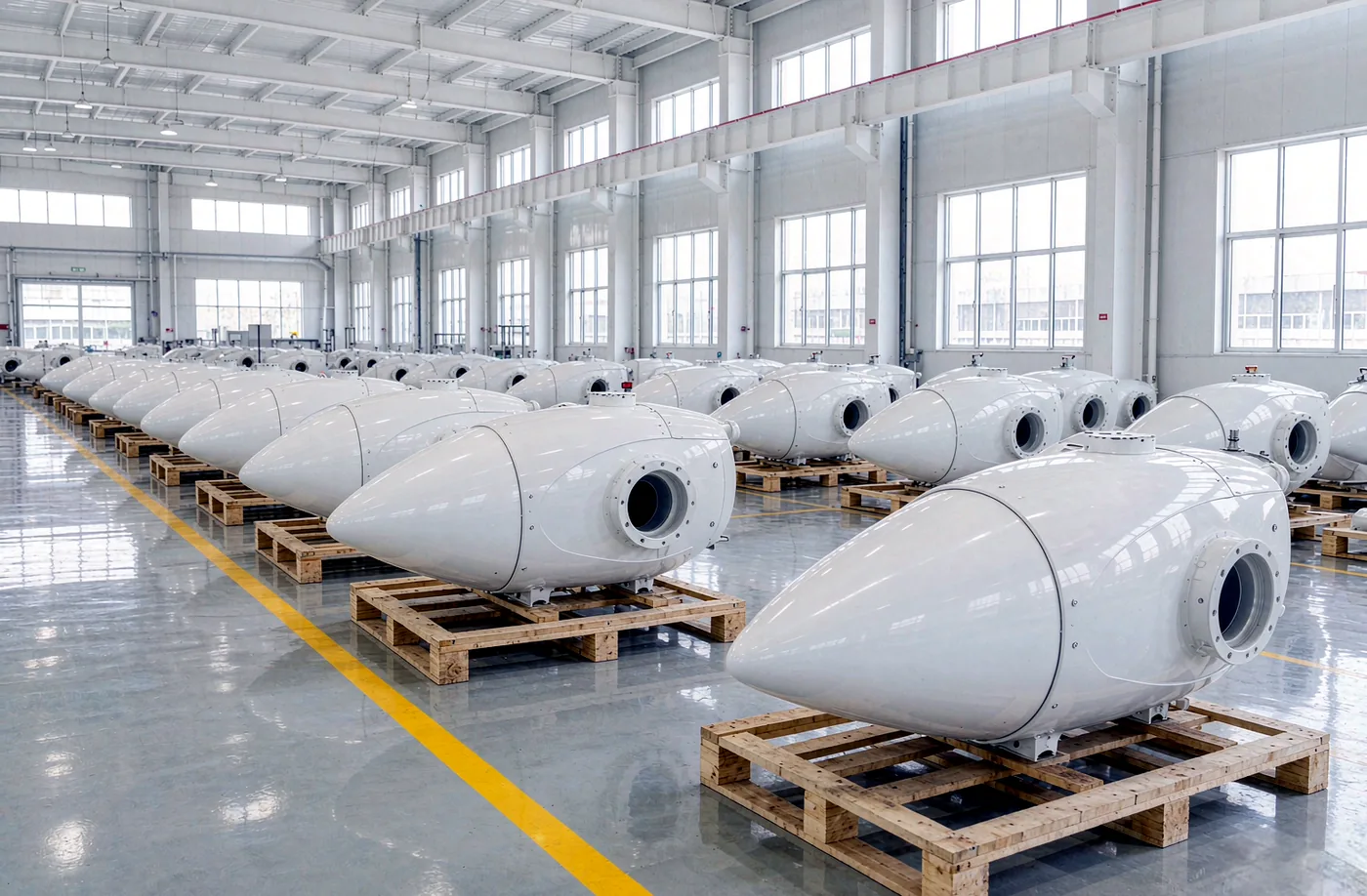
Inside the factory

From nacelle assembly to final dispatch, all in our own plant

Factory visits and third-party inspections are welcome any time — for equipment at this value, seeing is believing.

Finished nacelles lined up on the assembly floor
Nacelles off the assembly line
Finished units hall with horizontal and vertical axis models
Finished units & final inspection
Finished nacelle store ready for dispatch
Ready for dispatch
Small wind turbines running on a green hillside
In service on site
2 hoursload test for every unit, report included
IEC 61400-2load and safety design basis
10 yearsspare parts stocked for the design life
3 / 5 yearsfull warranty, 5 years on structure
Small wind turbine on a lattice tower beside a house

Where it works

From a backyard pole to a 100 kW farm machine

We size every system from the wind resource, not from a catalogue. Send us a location, an average wind speed and a monthly kWh target, and you get a rotor diameter, tower height and battery size that match the load.

  • Sizing report with expected annual kWh and simple payback
  • Tower options: guyed pole, lattice, rooftop frame, monopole
  • Foundation drawings and lifting plan included with every order
  • Spare blade, bearing and controller kits kept in stock
Request a sizing report

Applications

Nine places our turbines earn their keep

Compare applications in detail

Sizing matrix

Power class × application, placed in three seconds

● typical configuration, ○ feasible with custom engineering. Not sure? Run the 60-second sizer below.

Application≤1 kW2–5 kW10–20 kW30–50 kW100–200 kW
Homes & off-grid cabins●●
Street lights & CCTV●○
Farm pumping & irrigation○●●
Telecom sites○●●
Islands & coastal farms●●○
Village micro-grids○●●
Commercial rooftops○●●
Industrial self-supply○●●
Small wind farms○●

Where does your site fall? Run the 60-second sizer with a wind speed and a monthly kWh figure.

Model overview

Typical specifications

Figures below are for the standard configuration at sea level. Site-specific wind class, tower height and controller options are quoted per project.

ModelTypeRated powerRotor ØCut-inRated windSurvival
GH-A1000HAWT1 kW2.4 m2.8 m/s11 m/s52 m/s
GH-A3000HAWT3 kW3.8 m3.0 m/s11 m/s55 m/s
GH-A5KHAWT5 kW5 m3.0 m/s11 m/s59.5 m/s
GH-A10KHAWT10 kW7.8 m3.0 m/s11 m/s59.5 m/s
GH-A20KHAWT20 kW10 m3.0 m/s11 m/s45 m/s
GH-D50KWHAWT50 kW16 m2.5 m/s11 m/s59.5 m/s
GH-D200KWHAWT200 kW30 m2.5 m/s11 m/s59.5 m/s
GH-H5000VAWT5 kW3 m × 5 m2.0–2.5 m/s11–12 m/s45 m/s
GH-H10KVAWT10 kW4 m × 6 m2.2 m/s12 m/s45 m/s
GH-H100KVAWT100 kW15 m × 20 m2.2 m/s12 m/s45 m/s

All 17 models, 300 W–200 kW horizontal axis and 1–100 kW H-type vertical axis, are tabulated on the full specification page. Need power curves and dimension drawings? Ask for the technical file.

60-second sizer

Wind speed + monthly kWh = a power class, right now

Estimated from the Rayleigh wind distribution and the real rotor diameters we ship. Indicative only — a formal selection needs a wind resource assessment.

Tell us the site. We will size the turbine.

Average wind speed, load profile, grid availability and budget — that is all we need to send back a model recommendation, a power estimate and a delivered price.

Start an inquiry Browse models

FAQ

Home wind turbine questions

Four things worth knowing before you buy.

How much does a wind turbine for a home cost?
A complete 3 kW system — turbine, 12 m tower, foundation, controller, battery and installation — runs USD 6,300–9,800 in most markets, and a 5 kW system USD 8,400–13,000. Tower and civil works are about a third of that, and they are where most quotes differ.
What average wind speed do I need?
4.5 m/s at hub height is the practical floor; 5.5 m/s makes the payback comfortable. Below 4 m/s a small turbine produces very little, and no amount of rotor area fixes it — measure for three months before you buy rather than trusting a regional wind map.
Is wind better than solar for a house?
For most houses, no: a 3 kW PV array costs less, produces two to four times the energy and needs no maintenance. Wind earns its place where the wind blows when the sun does not — high latitudes, winter-peaking loads, coastal and island sites — or where the roof is shaded and the plot is open.
Do I need planning permission?
In most countries a tower above 3–5 m needs permission, and the application usually asks for hub height, rotor diameter, noise data and a structural drawing. We supply those documents with every order; the application itself is local and normally handled by your installer.